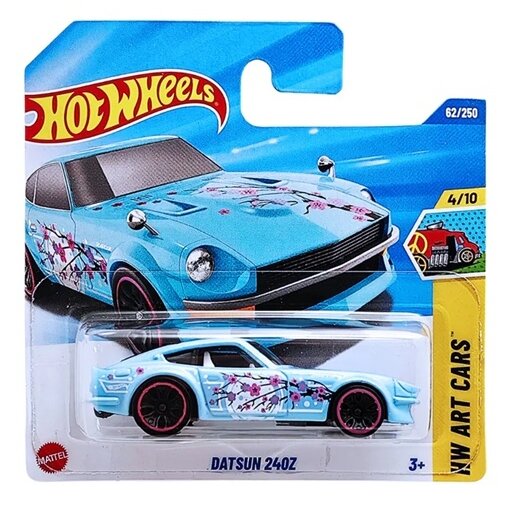
The global automotive landscape of the 1970s witnessed an intensely pivotal historical moment when Nissan introduced the Datsun 240Z to international markets. In its home country of Japan, this legendary machine carried the celebrated Fairlady Z moniker. Its arrival was far more than a routine product launch for a new sports coupe; it was a revolutionary statement that proved to established Western automakers that the Japanese automotive industry possessed the engineering prowess to build a stunning, high-performance, thoroughly reliable, and genuinely accessible sports car. More than four decades after its historic debut, the golden aura of this classic sports car remains vibrantly alive, burning even brighter among contemporary Japanese Domestic Market (JDM) tuning enthusiasts and die-cast collectors around the globe. Hot Wheels beautifully honored this rich motoring heritage by crafting a 1:64 scale Datsun 240Z casting deeply inspired by classic vintage street-racing culture, yielding a miniature model that remains continuously hunted across generations of die-cast collectors.
A Brief History of Japan’s Sports Car Pioneer
To truly appreciate why the Hot Wheels Datsun 240Z is so fiercely sought after in the collector market, one must look back at the monumental history behind the real-world machine. In the late 1960s, the global sports car market was heavily dominated by European manufacturers like Triumph, MG, Jaguar, and Porsche. While these European machines offered captivating performance and styling, they were frequently criticized for being expensive, mechanically complex, and prone to reliability issues during daily driving.
Recognizing a massive gap in the market, Yutaka Katayama—then President of Datsun USA and affectionately known as “Mr. K”—pushed Nissan’s Japanese management to engineer a pure, accessible sports car capable of conquering the North American market. The result of this ambitious vision was the Datsun 240Z, powered by a highly responsive 2.4-liter L24 inline-six engine. Paired with independent four-wheel suspension and a sweeping, elegant body designed by Yoshihiko Matsuo, the 240Z became an overnight sensation. It single-handedly transformed the global image of Japanese automakers from builders of economical commuters into respected creators of world-class performance vehicles.
1:64 Scale Design Anatomy and Hot Wheels Tooling Precision
Translating the timeless, sweeping body aesthetics of the Datsun 240Z into a miniature die-cast model measuring just a few inches required an absolute masterclass in scale proportions from the Hot Wheels design team. The original road-going vehicle is universally celebrated for its traditional long hood, short deck silhouette—an extended, sweeping front engine bay designed to house a potent inline-six engine, paired with a compact, dramatically sloping rear passenger cabin. Hot Wheels captured these specific, challenging proportions with surgical accuracy and artistic balance. As a result, this 1:64 scale model exhibits a planted, muscular street-racer footprint that looks aggressively poised to attack a winding mountain pass even while sitting completely motionless on a display shelf.
The absolute focal point of this casting lies in its custom aerodynamic enhancements, specifically the inclusion of the legendary G-Nose (Grand Prix Nose) front end and wide bolt-on fender flares reminiscent of 1970s Works competition vehicles. The elongated front bumper stretches forward into a sharp, aerodynamic wedge, housing enlarged lower cooling intakes engineered to channel airflow directly toward the engine compartment. The deeply recessed circular headlight housings give the car an aggressive, focused glare that radiates classic circuit racing nostalgia and unyielding highway presence.
Moving along the side profile, Hot Wheels sculpted the muscular flared wheel arches with impressive manufacturing precision. These widened fenders do far more than just give the car a heavy-set, commanding footprint; they allow the design team to tuck wide racing wheels beneath the bodywork while achieving a slammed, track-ready ride height. The sweeping roofline flows gracefully from the raked windshield down toward the large rear glass hatch, establishing a clean, continuous fastback profile that enhances the model’s aerodynamic visual flow.
At the rear deck, the casting features a prominent integrated ducktail spoiler mounted firmly onto the hatch door assembly. The horizontal taillight lenses are printed with fine graphic precision, framed by a minimalist bumper structure that respects the vehicle’s vintage roots. Furthermore, on select custom variants and premium collector editions, Hot Wheels incorporated exposed dual exhaust tips—either stacked in a custom Kagami style or angled aggressively outward from the lower rear diffuser—offering an authentic, unmistakable nod to vintage Japanese street-tuning culture.
Exploring Release Variations: From Mainlines to Red Line Club Exclusives
Since its initial debut in the Hot Wheels lineup, the Datsun 240Z casting has consistently received elite treatment from Mattel’s product designers. The production history of this casting spans multiple release tiers, catering to collectors with varying budgets and display preferences.
In its mainline appearances, the car is frequently dressed in period-correct racing colors such as bright white, solid competition red, or deep navy blue, embellished with vintage race numbers and retro side stripes. These clean, period-accurate liveries do a phenomenal job of highlighting the car’s classic body contours while emphasizing its historical competition roots. The mainline tier serves as an accessible entry point for entry-level collectors to appreciate the Fairlady Z silhouette without needing a massive budget.
For collectors demanding a higher degree of execution, Hot Wheels regularly features this casting in its Premium series, such as Car Culture and Japan Historics. At this level, the model gains a heavy all-metal base, giving it a substantial weight and premium tactile feel in hand. The addition of authentic Real Riders rubber tires paired with period-correct wheels—such as iconic eight-spoke RS Watanabe or SSR Hayashi Racing replicas—transforms the miniature into a true scale replica. Delicate details like Datsun badges, door handles, and window trim are applied using high-resolution tampo printing techniques.
The pinnacle of this casting’s production resides in ultra-exclusive releases like the Red Line Club (RLC). RLC editions introduce premium features unavailable on standard releases, including an opening hood that reveals a detailed, multi-piece replica of the L24 inline-six engine block. The application of high-gloss, deep Spectraflame paint gives the zinc-alloy body an exquisite, mirror-like metallic finish under display lighting. Complete with acrylic display cases and individual production numbering, RLC variants of the Datsun 240Z have solidified their status as high-value die-cast investments on the secondary market.
Pop Culture Legacy and Collector Value
The immense market popularity and investment appeal of the Hot Wheels Datsun 240Z are also deeply reinforced by its powerful pop-culture legacy. The real-world car did not only prove its mettle on actual racetracks—such as dominating SCCA (Sports Car Club of America) events and winning the grueling East African Safari Rally—it also carved an indelible footprint across international media.
Prominent features across iconic Japanese automotive manga and anime series—most notably as the mysterious, legendary “Devil Z” in Wangan Midnight—have etched the Fairlady Z deeply into the hearts of car enthusiasts. The narrative portrayal of the 240Z as an unbeatable, soulful machine tearing down Tokyo’s Shuto Expressway created a lasting cultural phenomenon. Coupled with appearances in mainstream racing video games and automotive documentaries, the 240Z’s appeal constantly reaches fresh generations of car lovers.
For younger collectors who grew up in the digital era, the Hot Wheels Datsun 240Z represents the peak of retro aesthetic cool. For seasoned collectors, it serves as a tangible, nostalgic reminder of Japan’s golden era of automotive innovation and international motorsport triumph.
These factors provide the Datsun 240Z casting with exceptional market liquidity and long-term value stability. Unlike fantasy castings or short-lived automotive trends that quickly fade, collector demand for the 240Z remains remarkably consistent, surging every time Hot Wheels announces a fresh colorway or premium livery.
Display and Care Guide for Your Datsun 240Z Collection
To preserve both the visual appeal and financial value of your Hot Wheels Datsun 240Z models, implementing proper display and maintenance practices is essential:
- Preserving Mint-on-Card (MOC) Models: If you choose to keep your models sealed in their original blister packaging, always house them inside high-grade, UV-resistant acrylic or plastic protector cases. Keep your carded collection away from direct sunlight to prevent the card art from fading and the plastic blister from becoming brittle or yellowed over time.
- Showcasing Loose Models: For collectors who prefer unboxing their models for tactile enjoyment, display them inside dust-proof acrylic cases or custom glass cabinets. Setting up vintage Japanese garage dioramas or Tokyo streetscapes can dramatically elevate the visual narrative of your display shelf.
- Routine Maintenance: Use a soft-bristled camera lens brush or an anti-static microfiber cloth to gently remove ambient dust from the bodywork. Avoid harsh liquid cleaners or chemical polishes, as these can strip the clear coat or damage delicate tampo graphics applied to the model.
Why the Datsun 240Z is a Must-Have Anchor Piece
For anyone dedicated to building a JDM-centric die-cast collection, having the Hot Wheels Datsun 240Z on display is an absolute necessity. The model serves as an essential historical anchor connecting the raw, analog driver-focused sports car era to modern, digitally controlled performance machines.
Its athletic footprint, iconic G-Nose styling, rich racing pedigree, and timeless visual charm make this model one of Hot Wheels’ absolute finest achievements. It is a high-value, story-rich miniature whose prestige and appeal will never fade.