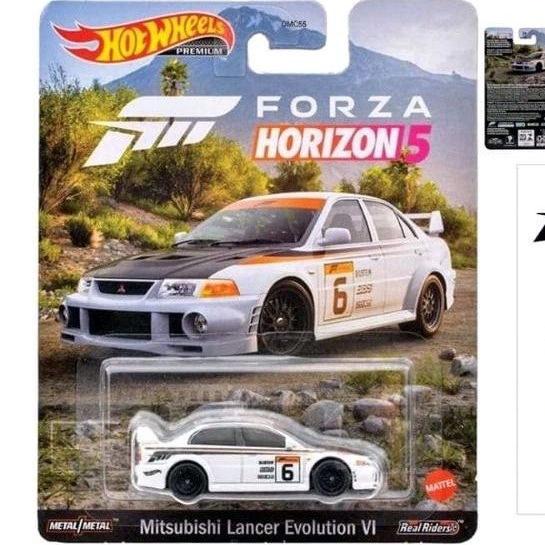
During the late 1990s, the World Rally Championship (WRC) reached its absolute golden zenith. The fierce, legendary rivalry between two Japanese automotive titans—Subaru and Mitsubishi—spawned a generation of high-performance road cars that are practically revered by automotive enthusiasts today. Amidst the mud, gravel, and twisting tarmac stages, one machine carved out an immortal legacy by propelling Finnish rallying icon Tommi Mäkinen to four consecutive WRC Drivers’ World Championships from 1996 to 1999. That car was the Mitsubishi Lancer Evolution VI (CP9A). Hot Wheels captured this rally-bred legend in 1:64 scale with remarkable body tooling and sharp aerodynamic precision, creating one of the most fiercely hunted classic JDM castings in die-cast collecting history.
A Brief History of the WRC Homologation King
To understand why the Hot Wheels Lancer Evolution VI commands such intense admiration among collectors, one must dive into the mechanical brilliance and motorsport pedigree of the full-scale machine. Introduced in January 1999 as a refined iteration of the Evo V, the Evo VI was engineered specifically to satisfy strict Group A WRC homologation regulations.
Housed beneath its vented aluminum hood sat the legendary turbocharged 2.0-liter inline-four engine coded 4G63T. Under Japan’s voluntary gentleman’s agreement at the time, output was officially rated at 276 horsepower with a massive 275 lb-ft of torque. However, the true genius of the Evo VI lay in its chassis rigidity and its groundbreaking Active Yaw Control (AYC) all-wheel-drive system. By actively metering torque between the left and right rear wheels based on steering angle and g-forces, AYC allowed the Evo VI to carve through technical tarmac corners with levels of traction that defied conventional physics.
1:64 Scale Design Anatomy and Hot Wheels Tooling Precision
Shrinking the muscular four-door sedan profile of the Lancer Evolution VI into a miniature model measuring just a few inches long required an exceptionally precise tooling approach from Hot Wheels designers. The original car was famous for its aggressive, boxy 1990s silhouette and functional aero cooling ducts. Hot Wheels captured these scale proportions flawlessly.
Front Fascia & Offset Cooling Ducts
The front end of the casting is anchored by a sharp, highly detailed front bumper assembly. A key design change on the real Evo VI compared to its predecessor was the downsizing and repositioning of the massive fog lights to the outer edges of the bumper, freeing up surface area for a larger front-mounted intercooler core. Hot Wheels molded these dual center grille openings and the low-slung chin spoiler with crisp definition, establishing an intimidating, track-ready gaze.
Boxy Side Profile & Flared Quarter Panels
Along the side profile, Hot Wheels sculpted the classic three-box sedan geometry paired with swollen, widebody fender flares. These broadened wheel arches give the model a heavy-set, grounded stance, accommodating wide competition-style wheels beneath the bodywork. Generous window glazing offers a clear view into the detailed interior, where Hot Wheels designers faithfully molded the cabin floor and dashboard layout.
Rear Deck and Iconic Biplane Rear Spoiler
At the rear, the model features the most famous visual element of the Evo VI: its distinctive double-deck biplane rear wing. This oversized rear spoiler was engineered on the real car to optimize rear downforce without increasing drag. The horizontal taillight lenses are applied using fine, high-resolution tampo graphics, complete with subtle Mitsubishi diamonds and “Lancer Evolution” decklid badging. A single large exhaust tip protrudes from the lower rear diffuser, rounding out an authentic 1990s tuner aesthetic from every angle.
Exploring Release Variations: From Mainlines to Tommi Mäkinen Editions
Since making its initial debut in the Hot Wheels lineup, the Mitsubishi Lancer Evolution VI casting has moved across multiple product tiers, consistently serving as a high-priority model for collectors.
Mainline Releases
In its mainline appearances, the Evo VI was presented in factory-correct competition colors, including Pyrenées Black, Satellite Silver, and the famous Scotia White. These clean, period-accurate liveries do a phenomenal job of highlighting the car’s angular body cuts and contrasting front grille openings. The initial mainline drops serve as accessible anchor pieces for any JDM or rally-themed collection.
Premium Series (Car Culture & Ralliart Liveries)
When elevated to adult collector series such as Car Culture: Mountain Drifters or specialized Tommi Mäkinen Edition (Evo 6.5) releases, the casting receives a comprehensive technical overhaul. Premium variants feature a heavy full-metal body and chassis construction that delivers a satisfying, substantial weight in hand. The addition of authentic Real Riders rubber tires mounted on white or dark Enkei WRC Tarmac-style rims elevates the model into a true scale display piece. Fine details like iconic red-and-black Ralliart racing stripes, sponsor decals, and window trim are applied with exceptional sharpness.
Pop-Culture Legacy and Global Collector Appeal
The global hype surrounding the Hot Wheels Lancer Evolution VI is heavily reinforced by its massive pop-culture footprint and motorsport history. The historic triumphs of the Mitsubishi Ralliart team and Tommi Mäkinen gave the Evo VI an emotional, nostalgic resonance among racing fans worldwide.
In media and gaming, the Evo VI holds an iconic hero-car status across flagship franchises, including Gran Turismo, Need for Speed, and Forza Motorsport. Furthermore, its prominent role in famous Japanese racing manga and anime like Initial D—where the Evo VI served as the primary weapon for Team Emperor—cemented its status as an immortal pillar of JDM car culture.
For die-cast investors, these deep historical roots give the Hot Wheels Lancer Evolution VI fantastic market liquidity and long-term value stability. Sealed rubber-tired Premium variants and early mainline colorways routinely see steady price appreciation on the secondary market due to high global demand.
Display, Preservation, and Care Guide
To keep your Hot Wheels Mitsubishi Lancer Evolution VI models looking pristine while maintaining their long-term collector value, following proper storage and care practices is recommended:
- Carded Storage (Mint on Card): If you prefer to keep your models sealed in their original blister packaging, always house them inside high-grade, UV-resistant plastic protector cases. Keep your collection away from direct sunlight to prevent the paint finish from fading and to keep the clear plastic blister bubble from discoloring over time.
- Showcasing Loose Models: For collectors who enjoy displaying unboxed models, house them inside dust-proof acrylic display cabinets. Grouping the Evo VI alongside its arch-rival—the Subaru Impreza 22B—creates a prestigious, historically accurate “WRC Rivals” display theme.
- Routine Maintenance: Remove ambient dust from loose models using a soft-bristled camera lens brush or an anti-static microfiber cloth. Avoid using harsh chemical cleaners, rubbing alcohol, or abrasive materials, as these can strip away delicate tampo-printed Ralliart graphics and damage the clear coat finish.
Why the Evo VI Belongs in Your Die-Cast Collection
For anyone passionate about collecting Japanese performance machinery and rally heritage, the Hot Wheels Mitsubishi Lancer Evolution VI is a non-negotiable anchor piece. This model is far more than just a miniature sedan; it is a physical monument to the peak of Mitsubishi’s all-wheel-drive engineering dominance on the world stage. With its muscular boxy stance, iconic biplane rear wing, and rich motorsport lineage, this high-octane casting guarantees your 1:64 scale performance garage commands total respect.