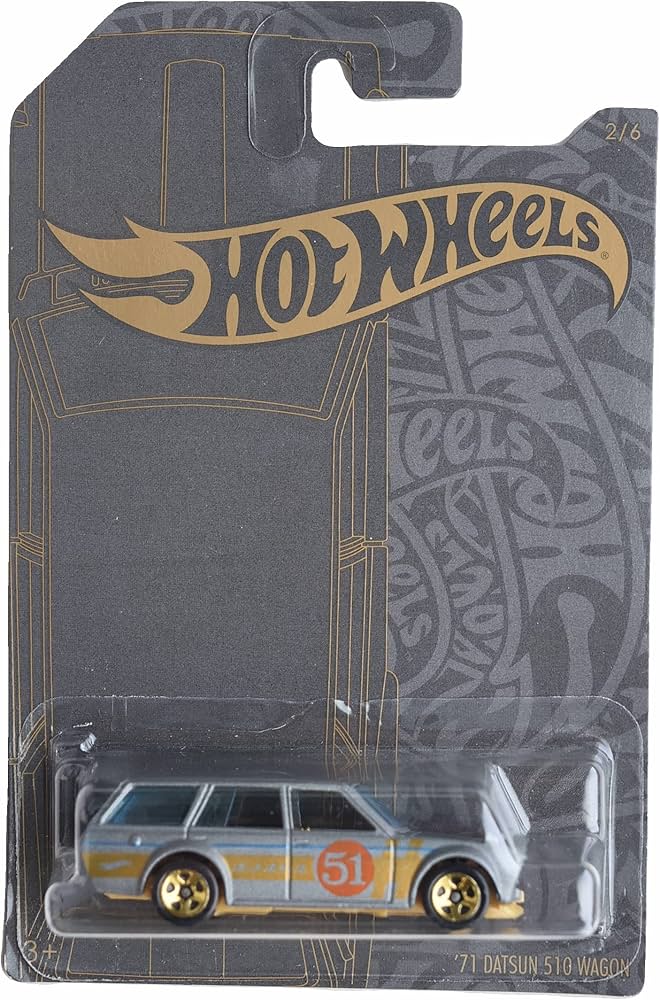
Among the tens of thousands of die-cast castings created by Mattel over the past five decades, few models have single-handedly shifted global collecting trends as dramatically as classic Japanese Domestic Market (JDM) performance vehicles. Standing at the absolute pinnacle of this revolution is a casting that holds a near-sacred status among collectors worldwide: the ’71 Datsun 510 Wagon. Sculpted by former Hot Wheels lead designer Jun Imai, this 1:64 scale die-cast based on Nissan’s iconic 1971 station wagon transformed a humble retro family hauler into one of the most influential, highly sought-after, and financially valuable toolings in the entire history of modern die-cast collecting.
A Brief History of the “Poor Man’s BMW”
To understand why the Hot Wheels ’71 Datsun 510 Wagon ignites such intense passion among collectors, one must look back at the historical impact of the full-scale automobile. Released in the late 1960s and early 1970s under the vision of Nissan executive Yutaka Katayama (affectionately known as “Mr. K”), the Datsun 510 lineup revolutionized how Western drivers viewed Japanese imports.
The Datsun 510 earned the nickname “The Poor Man’s BMW” because it delivered sharp, independent rear suspension handling and European-style driving dynamics at a fraction of the cost of a sports sedan. The 5-door station wagon variant (internal chassis code W510) combined practical cargo capacity with the bulletproof reliability of Nissan’s 1.6-liter L16 inline-4 engine. In the hands of vintage racers, surfers, and Japanese tuner culture enthusiasts, the 510 Wagon quickly became an iconic canvas for West Coast beach cruisers and vintage Kyusha track builds alike.
1:64 Scale Design Anatomy and Jun Imai’s Custom Touch
Shrinking the boxy 510 Wagon silhouette into a 1:64 scale die-cast model with custom JDM tuner proportions required true design wizardry. When Jun Imai debuted the casting in 2013, he didn’t merely replicate a bone-stock showroom vehicle—he infused it with a lowered, resto-mod stance that redefined Hot Wheels aesthetic standards.
Recessed Billet Grille & Quad Circular Headlights
The front profile of the Hot Wheels ’71 Datsun 510 Wagon is anchored by a deep-set horizontal grille layout framing quad circular headlight optics. A classic chrome front bumper is paired with a subtle front chin spoiler (front lip) tucked underneath, giving the front fascia an aggressive, road-hugging presence.
Slammed Station Wagon Profile & Surf Culture Vibe
Along the side profile, the casting replicates the crisp, boxy window pillars and straight shoulder lines characteristic of 1970s Japanese wagons. The defining signature of Jun Imai’s tooling is its slammed ride height, with the wheels tucked neatly inside the wheel arches. On many releases, a molded rear window display features detailed surfboards visible inside the rear cargo area, honoring California beach culture.
Upright Tailgate & Classic Chrome Rear Bumper
At the rear, the model features an upright station wagon tailgate flanked by horizontal taillight lenses. A curved chrome rear bumper anchors the lower valance, accompanied by a single exhaust pipe protruding from beneath the rear chassis pan, completing a timeless Japanese nostalgic wagon silhouette from every angle.
Exploring Release Variations: From Boulevard 2013 to Japan Historics
Since making its initial debut in the 2013 Hot Wheels Boulevard series, the ’71 Datsun 510 Wagon has consistently shattered secondary market price records across every tier of release.
The 2013 Boulevard Debut
The debut 2013 Boulevard release featured a green and white Brock Racing Enterprises (BRE) #46 livery, real rubber Real Riders 4-spoke wheels, and exquisite micro-tampo graphics. Today, a pristine carded example of this debut release is considered an absolute “holy grail” asset, regularly fetching hundreds to thousands of dollars on the secondary collector market.
Premium & Red Line Club (RLC) Exclusives
Subsequent appearances in premium lines—such as Japan Historics 1, Car Culture, Super Treasure Hunts (STH) in brilliant Spectraflame paint, unpainted ZAMAC drops, and feature-packed Red Line Club (RLC) exclusives with opening doors and custom display cases—have solidified its position. Every single time a new variation of the ’71 Datsun 510 Wagon is announced, it instantly becomes the flagship chase model of the entire assortment.
Pop-Culture Fame and Blue-Chip Collector Status
The global phenomenon surrounding the Hot Wheels ’71 Datsun 510 Wagon was the primary catalyst for the explosion of JDM die-cast collecting worldwide. Its overwhelming success proved to toy manufacturers that vintage Japanese tuning culture had massive mainstream appeal, forever shifting collector attention alongside classic American muscle.
In digital entertainment and video games, the Datsun 510 Wagon holds a celebrated presence across flagship racing titles such as Forza Horizon, Need for Speed, and Hot Wheels Unleashed. Its virtual inclusion allows younger generations of automotive enthusiasts to appreciate vintage Japanese wagon culture in a modern digital space.
For die-cast investors, the ’71 Datsun 510 Wagon represents the ultimate blue-chip collectible. Rare variants—specifically the 2013 Boulevard first edition, RLC releases, and Super Treasure Hunts—have demonstrated some of the most consistent, skyrocketing value appreciation in the history of die-cast collecting.
Display, Preservation, and Care Guide
To keep your Hot Wheels ’71 Datsun 510 Wagon models looking pristine while protecting their significant financial value, following proper care and storage practices is recommended:
- Carded Storage (Mint on Card / RLC): For high-value carded models, it is essential to store them inside rigid, UV-resistant acrylic or hard plastic clamshell protector cases. Keep carded models in a climate-controlled environment away from direct sunlight to prevent delicate paint finishes and BRE racing liveries from fading over time.
- Showcasing Loose Models: For collectors displaying unboxed models, set them up inside dust-proof acrylic display cabinets illuminated by cool LED lighting. Displaying the ’71 Datsun 510 Wagon alongside other Japanese nostalgic icons (such as the Datsun 510 Sedan, Nissan Skyline GT-R Hakosuka, and Mazda RX-3) creates a world-class “Classic JDM Garage” theme.
- Routine Maintenance: Gently remove ambient dust from the bodywork, roof rails, and lowered wheel arches using a soft-bristled camera lens brush or an anti-static air blower. Avoid using chemical solvents or alcohol-based cleaners, as these can permanently damage fine micro-tampo sponsor decals and clear-coat finishes.
Why the ’71 Datsun 510 Wagon Belongs in Your Die-Cast Collection
For anyone passionate about collecting world-class die-cast models, honoring Japanese automotive heritage, and investing in premier die-cast assets, the Hot Wheels ’71 Datsun 510 Wagon is an indispensable crown jewel. This model is far more than a simple 1:64 scale die-cast toy; it is a physical monument to a cultural movement that changed the die-cast landscape forever. With its flawless slammed stance, crisp retro wagon lines, and matchless secondary market prestige, this JDM icon guarantees your die-cast garage commands total respect.