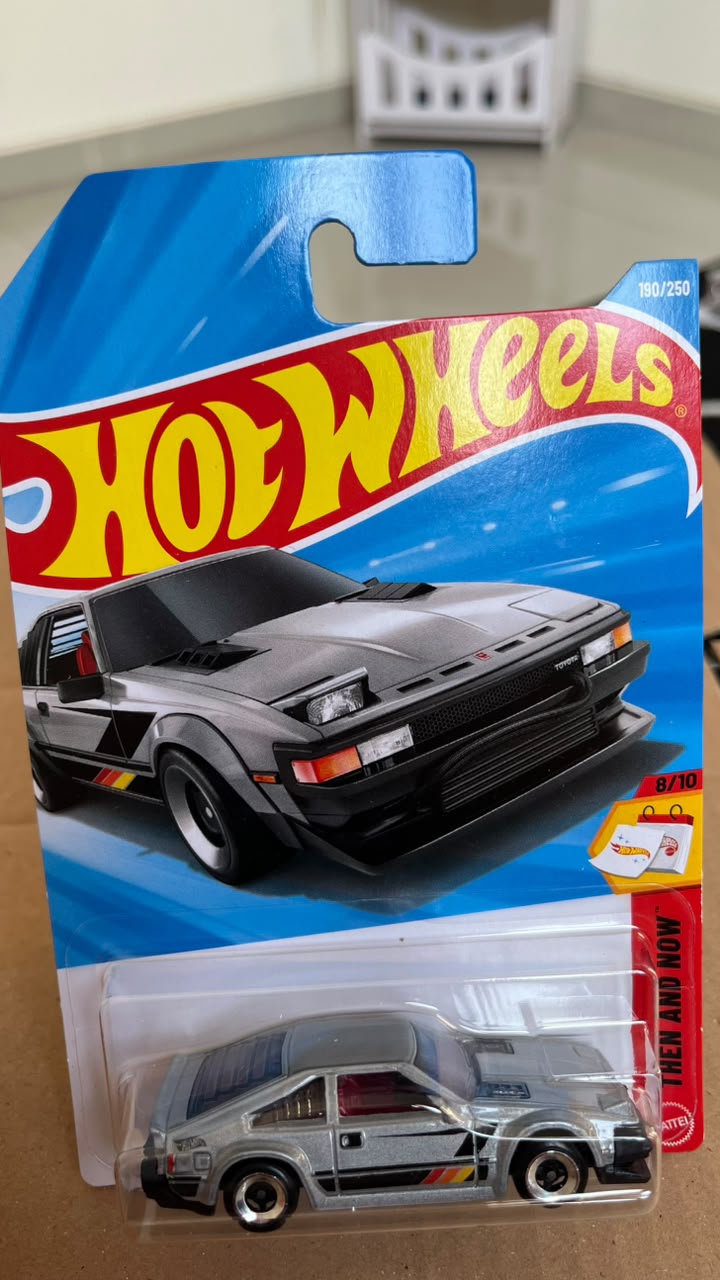
While the fourth-generation Toyota Supra (A80) dominates the Hollywood spotlight and mainstream pop culture, true automotive purists always remember the roots of Japan’s ultimate grand tourer. Before the Supra branched off into a standalone high-performance lineup, the nameplate was born as the flagship, six-cylinder variant of the Toyota Celica family. Introduced in late 1981 for the 1982 model year, the Toyota Celica Supra (Mk2 / A60)—known in Japan as the Celica XX—redefined what an accessible Japanese sports coupe could achieve on the global stage. Designed under the guidance of the late, legendary Hot Wheels designer Ryu Asada, the ’82 Toyota Supra casting brings this 1980s pop-retro hero to 1:64 scale with astounding geometric precision, making it one of the most fiercely hunted classic JDM models in modern die-cast collecting.
A Brief History of the Inline-Six Trailblazer
To understand why the Hot Wheels ’82 Toyota Supra commands such high respect among collectors, one must look at the technological leap forward the full-scale machine brought to the early 1980s. Designed to directly challenge European and American grand tourers, the Mk2 Supra established the fundamental DNA that would define every future Supra generation.
The defining difference between a standard Celica and the Supra lay in the extended front end. Toyota lengthened the nose to accommodate the 5M-GE 2.8-liter DOHC inline-six engine—establishing the signature 6-cylinder layout that remains synonymous with the Supra nameplate today. Producing 145 horsepower (an impressive figure for its era), the Mk2 came equipped with a 5-speed manual transmission and an independent rear suspension setup engineered with technical assistance from Lotus Cars. This chassis tuning ensured the ’82 Supra possessed sharp, nimble cornering dynamics alongside comfortable high-speed highway cruising.
1:64 Scale Design Anatomy and Hot Wheels Tooling Precision
Shrinking the wedge-shaped, boxy, and distinctly 1980s silhouette of the ’82 Toyota Supra into a die-cast model measuring just roughly three inches long required an exceptional level of detail execution. Hot Wheels captured the angular hatchback coupe proportions with incredible authenticity.
Front Fascia & Retractable Headlight Assemblies
The front end of the casting is anchored by a sharp, chisel-nosed front bumper housing sealed pop-up headlight covers. A key visual signature of the ’82 Supra is its prominent lower chin spoiler paired with precise tampo-printed turn signals and fog light lenses, giving the model an aggressive, ground-hugging front gaze.
Muscular Profile & Factory Fender Flares
Along the side profile, the Hot Wheels tooling faithfully replicates the pronounced box-flared wheel arches characteristic of the real car’s factory Performance Package. These broadened quarter panels give the model a planted, athletic stance, filling the wheel wells cleanly. Crisp, straight body lines run uninterrupted along the flanks, emphasizing the clean 1980s styling cues.
Hatchback Rear & Iconic Window Louvers
At the rear, the model features the sloping rear hatchback glass crowned by an integrated ducktail rear spoiler. On select releases, Hot Wheels molded fine horizontal rear window louvers (sunshades) into the rear glass—an iconic 1980s accessory that elevates the retro aesthetic. Below the bumper sits a single exhaust outlet, completing an authentic classic GT profile from every viewing angle.
Exploring Release Variations: From Mainlines to Car Culture Premium
Since its debut in the Hot Wheels lineup in 2021, the ’82 Toyota Supra casting has moved across multiple release tiers, consistently serving as a highlight in every assortment.
Mainline Releases
In its mainline debut (within the Retro Racers series), the Supra was showcased in factory-inspired shades, including Lava Red and clean Super White. These clean, period-correct liveries showcased the contrast between the vibrant body paint and the black bumper trim, paired with classic 5-spoke plastic wheels. The initial mainline drops disappeared from retail pegs almost instantly as JDM collectors rushed to add the casting to their displays.
Premium Series (Car Culture & Mountain Drifters)
When elevated to adult collector assortments—such as Car Culture: Mountain Drifters or specialized JDM sets—the ’82 Supra receives a full technical upgrade. Premium variants feature a heavy full-metal body and chassis construction (metal/metal) that delivers a substantial weight in hand. The addition of authentic Real Riders rubber tires mounted on four-spoke retro tuner rims (resembling classic Hayashi Street or SSR Mesh wheels) transforms the model into a museum-grade display piece. Micro-tampo details cover delicate Supra badging, window trim, and multi-colored taillight housings with incredible sharpness.
Pop-Culture Legacy and Global Collector Appeal
The global hype surrounding the Hot Wheels ’82 Toyota Supra is heavily reinforced by the booming popularity of 1980s nostalgia, synthwave aesthetics, and classic Japanese tuner culture. As the founding father of the modern Supra lineage, the Mk2 holds a special place in the hearts of JDM historians and vintage car enthusiasts alike.
In digital media and video games, the Mk2 Celica Supra holds a strong presence across major racing franchises like Gran Turismo, Forza Horizon, and Need for Speed. Its inclusion in modern racing games ensures that newer generations of car lovers continue to recognize and respect the Mk2 as the foundation upon which the legendary A80 and A90 Supras were built.
For die-cast investors, the historical weight of the Supra badge combined with timeless retro styling gives the ’82 Toyota Supra fantastic market stability and liquidity. Early mainline drops and sealed rubber-tired Premium releases consistently maintain strong collector interest on the secondary market.
Display, Preservation, and Care Guide
To keep your Hot Wheels ’82 Toyota Supra models looking pristine while maintaining their long-term value, following proper storage and care practices is recommended:
- Carded Storage (Mint on Card): If you prefer keeping your models sealed inside their original blister packaging, house them inside rigid, UV-resistant plastic clamshell protector cases. Keep your collection away from direct sunlight to prevent vibrant factory paint colors from fading and to keep the clear plastic blister bubble from yellowing over time.
- Showcasing Loose Models: For collectors who enjoy displaying unboxed models, place them inside dust-proof acrylic cases or glass cabinets. Grouping the ’82 Supra alongside other generations of the Supra lineage (A70, A80, and A90) creates a prestigious, historically rich “Evolution of Supra” display theme.
- Routine Maintenance: Gently remove ambient dust using a soft-bristled camera lens brush or an anti-static blower. Avoid using chemical solvents, rubbing alcohol, or abrasive microfiber cloths, as these can easily damage or strip the fine tampo graphics and clear coat finish.
Why the ’82 Toyota Supra Belongs in Your Die-Cast Collection
For anyone passionate about collecting Japanese automotive heritage and vintage 1980s sports coupes, the Hot Wheels ’82 Toyota Supra is an indispensable anchor piece. This model is far more than a simple 1:64 scale die-cast toy; it is a physical monument to the birth of one of the most celebrated performance names in automotive history. With its athletic wedge-shaped footprint, retro pop-up headlights, and rich inline-six lineage, this classic casting guarantees your performance garage commands total respect.